

California Motorcycle Helmet Law: Why It Matters for Your Safety and Your Claim

California motorcycle helmet law requires every rider and passenger to wear a DOT-compliant helmet under Vehicle Code section 27803. Beyond meeting that requirement, a properly worn helmet protects against serious head injuries. It also helps keep the focus of an injury claim on the other driver’s actions.
If you ride in Los Angeles, it is helpful to know why helmets matter and how helmet use fits into a motorcycle accident claim.
What California Motorcycle Helmet Law Requires
California Vehicle Code section 27803 applies to both the driver and any passenger. Each person must wear a safety helmet when riding on a motorcycle, motor-driven cycle, or motorized bicycle. The helmet must meet the requirements set under Vehicle Code section 27802.
The statute also defines what “wearing” a helmet means. The helmet must be on your head, fastened with its straps, and sized to fit securely. A helmet that shifts excessively side to side or up and down does not meet the standard.
Two more points are worth knowing:
- It is unlawful to operate a motorcycle if the driver or any passenger is not wearing a compliant helmet.
- It is also unlawful to ride as a passenger if anyone on the motorcycle is not wearing one.
The law includes a narrow exception for certain fully enclosed three-wheeled vehicles that meet size, weight, and federal safety requirements. Standard motorcycles do not qualify.
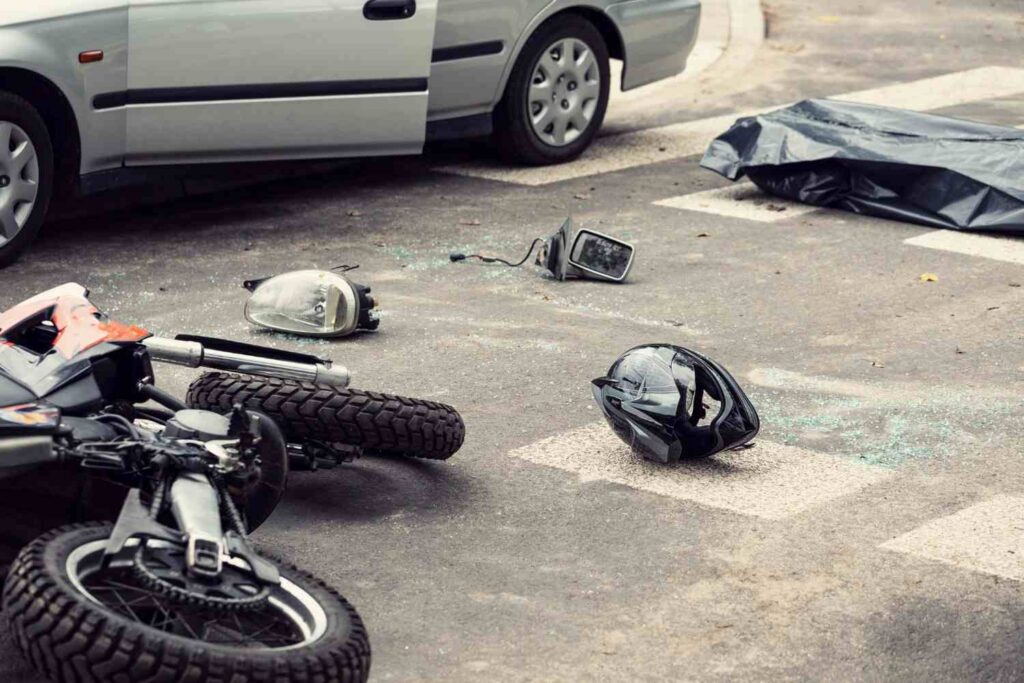
Why Wearing a Helmet Matters Under California Motorcycle Helmet Law
Riders have very little physical protection in a crash. A helmet is the main safeguard for the head, and head trauma is a common source of life-changing injury.
The National Highway Traffic Safety Administration (NHTSA) estimates that motorcycle helmets are about 37 percent effective at preventing fatalities. That estimate comes from comparing fatal crashes involving two riders, where at least one rider died.
A helmet cannot prevent every injury. It does reduce exposure to some of the most serious ones. Traumatic brain injuries often require long-term medical care, rehabilitation, and time away from work.
Fit and condition matter too. A DOT-compliant helmet that is loose, damaged, or unfastened may not perform as intended. Checking the fit and the chin strap before each ride is a simple habit that supports both safety and compliance with California motorcycle helmet law.
How Helmet Compliance Supports Your Injury Claim
Helmet use does not decide who caused a crash. Fault depends on how the collision happened. Still, showing you followed California motorcycle helmet law removes one argument an insurance company might otherwise raise.
California’s Pure Comparative Negligence Rule
California follows a pure comparative negligence system, established in Li v. Yellow Cab Co. (1975) 13 Cal.3d 804. Under this rule, an injured person may recover damages even if they are partly responsible. The recovery is reduced by that person’s percentage of fault.
For example, if a jury found a rider 20 percent at fault for a $100,000 loss, the recovery would be reduced by 20 percent. This example is for illustration only and does not predict any result.
Insurers sometimes try to assign riders a larger share of fault. They may point to speed, lane position, or missing safety gear. Clear evidence of lawful riding, including a compliant helmet, makes those arguments harder to sustain.
Why Helmet Use Keeps the Focus on the Other Driver
Many motorcycle crashes involve another motorist who failed to yield, turned across a rider’s path, or changed lanes without checking. When a rider wears a compliant helmet, the investigation can focus on the driver’s conduct.
When a helmet was not worn, an insurer may argue that it worsened a head or brain injury. That argument generally relates only to injuries a helmet could have prevented. It usually does not extend to unrelated injuries such as fractures or road rash. How a court or insurer treats this issue depends on the facts and the medical evidence in each case.
What If You Were Wearing a Helmet and Still Were Hurt?
Following California motorcycle helmet law does not limit your right to pursue a claim. Riders who wore compliant helmets can still suffer concussions, spinal injuries, broken bones, and other harm.
In those cases, a claim may seek compensation for:
- Past and future medical expenses
- Lost wages and reduced earning capacity
- Pain, suffering, and loss of enjoyment of life
- Damage to the motorcycle, helmet, and riding gear
Keep the damaged helmet after the crash. It can serve as physical evidence of the impact. Do not repair, clean, or discard it, and store it somewhere safe until your attorney advises otherwise.
Steps to Protect Your Motorcycle Accident Claim
What you do after a crash can affect how your claim develops. These steps help preserve your rights:
- Get medical care right away. Some head and spinal injuries do not show symptoms immediately.
- Document the scene. Take photos of vehicle positions, road conditions, lane markings, and visible damage.
- Collect witness information. Names and phone numbers can be valuable later.
- Preserve your gear. Keep your helmet, jacket, gloves, and boots in their post-crash condition.
- Be careful with insurers. Speak with an attorney before giving a recorded statement.
- Mind the deadlines. California Code of Civil Procedure section 335.1 generally allows two years from the date of injury to file a personal injury lawsuit. Claims involving a government entity can carry much shorter deadlines.
Evidence also matters in fault disputes. Accident reconstruction and medical testimony can help explain what happened, as discussed in our article on motorcycle accident litigation in Los Angeles.
Speak With a Los Angeles Motorcycle Accident Lawyer
Personal Injury Legal Group represents injured riders across Los Angeles and Southern California. Our attorneys review how the crash happened, what evidence exists, and how insurers are likely to assign fault. For related legal questions, see our explanation of lane splitting in California.
If you were hurt in a motorcycle crash, a Los Angeles motorcycle accident lawyer can explain your options during a free consultation. Call 310-388-4306 or contact our team to get started.
