

Commercial Vehicle Impaired Driving Accidents
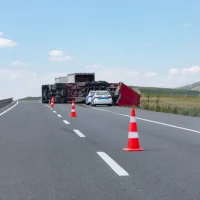
Commercial drivers are entrusted with operating some of the largest and most dangerous vehicles on California roads. Tractor-trailers, delivery trucks, buses, tanker trucks, and other commercial vehicles can weigh tens of thousands of pounds and cause catastrophic damage when involved in a collision. Because of the immense risks posed by these vehicles, commercial drivers are held to higher safety standards than ordinary motorists.
One of the most serious violations of those standards is driving under the influence of alcohol. Even small amounts of alcohol can impair judgment, reaction time, coordination, and decision-making. When an impaired commercial driver gets behind the wheel, the consequences can be devastating for everyone sharing the road.
At Kosnett Law Firm, we represent individuals and families injured in serious commercial vehicle accidents throughout Los Angeles. Cases involving impaired commercial drivers often involve complex issues relating to federal regulations, employer responsibility, and the evidence necessary to prove negligence in civil proceedings.
Why Alcohol Impairment Is So Dangerous
Alcohol affects the brain and body in ways that directly interfere with safe driving. Even before a driver reaches the legal limit for intoxication, alcohol can reduce the ability to perceive hazards, process information, and respond appropriately to changing traffic conditions.
For commercial drivers, these impairments are especially dangerous because of the size and weight of the vehicles they operate. A fully loaded tractor-trailer may require hundreds of feet to come to a complete stop. Delayed reaction times or poor judgment can therefore have catastrophic consequences. Likewise, drivers of box trucks and cargo vans plying crowded L.A. city streets must maintain constant vigilance and make split-second decisions that do not leave room for impaired judgment or reflexes.
Alcohol consumption can impair commercial driving in numerous ways, including:
-
- Reduced reaction time and slower emergency responses
- Impaired judgment and decision-making
- Decreased coordination and vehicle control
- Reduced ability to track moving objects
- Impaired depth perception and visual processing
- Increased risk-taking behavior and overconfidence
A commercial driver who misjudges traffic conditions, fails to recognize a hazard, or reacts too slowly may cause a collision involving multiple vehicles, severe injuries, or fatalities.
FMCSA Rules Regarding Alcohol Use
Interstate motor carriers and commercial drivers are subject to strict federal regulations governing alcohol use. The Federal Motor Carrier Safety Administration (FMCSA) imposes rules that are significantly more restrictive than those applicable to ordinary drivers.
The rules are strict and plain. Federal regulation 392.5 (alcohol misuse) prohibits commercial drivers from consuming alcohol within four hours before going on duty or operating a commercial vehicle. Drivers are forbidden to use alcohol, be under the influence, or have any measured alcohol concentration while on duty or while operating or in physical control of a commercial motor vehicle. Any driver found in violation of this rule will be immediately removed from service for 24 hours.
Other FMCSA rules regulate alcohol use while performing “safety-sensitive” functions that don’t necessarily include driving. For instance, safety-sensitive functions can include inspecting equipment, loading or unloading, and even time spent waiting to be dispatched. Section 382.201 prohibits a driver from reporting for duty or staying on duty that requires the performance of safety-sensitive functions with an alcohol concentration of 0.04% or greater. This threshold is half the legal limit that applies to non-commercial drivers in California. It can take as little as one beer, a glass of wine, or a shot of liquor to reach this limit, depending on body weight and other factors. Further, regulation 382.205 prohibits a driver from using alcohol while performing safety-sensitive functions. Like 392.5, 382.207 prohibits a driver from performing safety-sensitive functions within four hours of using alcohol. These rules also prohibit an employer having knowledge of the driver’s condition to allow the driver to perform safety-sensitive functions. The regulations here place clear duties on both the driver and the employer, potentially leading to liability for both parties.
The stricter rules reflect the recognition that commercial vehicles present extraordinary risks to public safety and that even modest impairment can have disastrous consequences when operating a large truck or bus.
DUI Consequences for Commercial Drivers
A DUI can have severe professional consequences for commercial drivers. In addition to potential criminal penalties, a DUI conviction may jeopardize a driver’s commercial driver’s license (CDL) and ability to earn a living. Federal regulations require the disqualification of a CDL following certain alcohol-related offenses. A first offense results in a one-year or three-year CDL suspension, depending on whether the driver was transporting hazardous materials at the time. A second offense results in a lifetime disqualification from commercial driving.
Importantly, these consequences may apply even when the offense occurs in a non-commercial vehicle. Commercial drivers are expected to meet higher standards both on and off the job because of the safety-sensitive nature of their profession.
For trucking companies and other commercial carriers, employing drivers with alcohol-related violations can create substantial liability risks. Companies that fail to screen drivers properly, ignore warning signs, or retain unsafe drivers may face significant exposure in civil litigation.
Common Types of Commercial Vehicle Alcohol-Related Accidents
Alcohol-related commercial vehicle accidents can occur in many different ways. Impaired drivers may struggle to maintain lane position, accurately judge speed and distance, or respond appropriately to changing traffic conditions. Some of the most common accident types include rear-end collisions, lane departure accidents, head-on crashes, rollover accidents, and intersection collisions. Alcohol impairment can also contribute to speeding, aggressive driving, and failure to obey traffic signals. Because commercial vehicles are so large, even relatively low-speed collisions can produce serious injuries. Victims often suffer traumatic brain injuries, spinal cord injuries, multiple fractures, internal injuries, and other catastrophic harm.
Civil Liability Does Not Require a DUI Conviction
One of the most important facts for accident victims to understand is that a criminal DUI conviction is not required to pursue a civil injury claim. Criminal cases and civil cases have different legal standards and different objectives. In a criminal prosecution, the government must prove guilt beyond a reasonable doubt. In a civil case, the injured victim generally must prove liability by a preponderance of the evidence, which is a much lower standard. As a result, a commercial driver may be held liable in a civil case even if criminal charges are never filed, are later dismissed, or do not result in a conviction.
Similarly, a formal arrest is not required. Evidence such as witness statements, toxicology results, driving behavior, surveillance footage, admissions by the driver, and expert testimony may establish that alcohol impairment contributed to the collision, regardless of what actions law enforcement took or didn’t take. The key issue in a civil case is whether the driver’s conduct was negligent and caused the victim’s injuries.
Employer Liability in Commercial Vehicle DUI Cases
Commercial carriers have legal obligations to hire qualified drivers and maintain safe operations. When companies fail to meet these responsibilities, they may share liability for alcohol-related crashes. For example, employer liability may arise when a company:
-
-
- Fails to conduct required alcohol testing
- Ignores prior alcohol-related violations
- Retains a driver with known substance abuse problems
- Fails to supervise drivers appropriately
- Violates federal safety regulations
-
In some situations, a company may be liable even if it did not know the driver was impaired at the time of the crash. A thorough investigation may reveal hiring failures, inadequate supervision, or violations of FMCSA requirements that contributed to the accident.
Because commercial carriers often carry substantial insurance coverage, identifying all responsible parties is critical to maximizing compensation.
Important Evidence in Impaired Driving Truck Accident Cases
Building a successful impaired-driving commercial vehicle claim often requires extensive investigation. Evidence may include police reports, field sobriety test results, breath or blood test results, driver qualification files, alcohol testing records, dispatch records, electronic logging data, and witness testimony. In some cases, accident reconstruction experts and toxicology experts may be necessary to explain how alcohol impairment affected the driver’s ability to operate the vehicle safely.
Commercial trucking companies and their insurers frequently begin investigating serious accidents immediately. Prompt legal representation can help preserve critical evidence before it is lost or destroyed.
FAQ: Commercial Vehicle Impaired Driving Accidents
What is the legal BAC limit for commercial drivers?
Under FMCSA regulations, commercial drivers generally may not operate a commercial motor vehicle with a BAC of 0.04% or higher, which is lower than the limit applicable to most non-commercial drivers.
Can I file a lawsuit if the truck driver was not convicted of DUI?
Yes. A criminal conviction is not required to pursue a civil injury claim. Liability can often be established through other evidence showing that impairment contributed to the accident.
Can a trucking company be responsible for an impaired driver’s accident?
Yes. A trucking company may be liable if it violated safety regulations, failed to conduct required testing, negligently hired or retained the driver, or otherwise contributed to the unsafe conduct.
What damages may be available after an alcohol-related commercial vehicle accident?
Victims may be entitled to compensation for medical expenses, lost income, future medical care, pain and suffering, and other losses. In some cases, punitive damages may also be appropriate.
What evidence helps prove a commercial driver was impaired?
Valuable evidence may include toxicology testing, police reports, witness testimony, surveillance footage, admissions by the driver, and expert analysis of the driver’s behavior and actions before the crash.
Contact Kosnett Law Firm in Los Angeles
If you or a loved one was injured in a commercial vehicle accident involving an impaired driver in Los Angeles, you should not have to bear the consequences of another person’s irresponsible choices. Kosnett Law Firm has experience handling complex commercial vehicle accident cases and pursuing compensation from negligent drivers, trucking companies, and other responsible parties. We work with investigators, accident reconstruction specialists, and industry experts to build strong claims and seek maximum compensation for our clients.
Contact Kosnett Law Firm today for a free consultation. We can evaluate your case, explain your legal options, and help you pursue the financial recovery you need after a serious commercial vehicle impaired driving accident.
