

Common Causes of Commercial Vehicle Accidents in Los Angeles: What You Need to Know
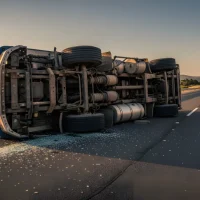
Commercial vehicle accidents in Los Angeles frequently result in severe injuries due to the size, weight, and operational demands of trucks, delivery vans, and other business-operated vehicles. Whether the collision involves a tractor-trailer on the 710 corridor, a delivery van in a residential neighborhood, or a utility truck navigating dense city traffic, these crashes present complex liability issues that extend beyond a typical car accident.
Identifying the cause of the collision is central to establishing liability. An experienced Los Angeles commercial vehicle accidents lawyer can evaluate how regulatory violations, driver conduct, and vehicle conditions contributed to the crash and build a claim supported by evidence and industry standards.
Commercial drivers and the companies that employ them are subject to federal and state safety regulations. Violations of those standards increase both the risk of collisions and legal exposure.
Fatigue and Hours-of-Service Violations
Driver fatigue remains a primary cause of commercial vehicle accidents. Long shifts, aggressive delivery schedules, and operational pressure lead to dangerous levels of exhaustion.
Federal hours-of-service regulations limit driving time and require rest periods. Violations impair reaction time, judgment, and awareness. Fatigued drivers drift between lanes, fail to respond to traffic conditions, and fall asleep at the wheel.
Electronic logging device data, driver logs, and dispatch records establish whether fatigue contributed to the crash.
Maintenance Failures and Mechanical Defects
Commercial vehicles require consistent inspection and maintenance to operate safely. Brake systems, tires, steering components, and lighting must meet regulatory standards.
Neglected maintenance leads directly to mechanical failure. Brake malfunctions, tire blowouts, and steering defects contribute to serious collisions.
Trucking companies and fleet operators are responsible for vehicle upkeep. Maintenance records, inspection reports, and repair histories reveal whether known safety issues were ignored or required inspections were skipped. When mechanical failure contributes to a crash, liability extends beyond the driver to the entity responsible for maintenance.
Overloaded and Improperly Secured Cargo
Improper cargo loading creates significant safety risks. Overloaded trucks require greater stopping distance and are more difficult to control, particularly during braking or turning.
Unsecured cargo shifts during transit, destabilizing the vehicle and increasing rollover risk. Cargo can spill into traffic, creating immediate hazards for other drivers.
Liability may extend to multiple parties, including the driver, trucking company, and third-party cargo loaders. Weight records, loading procedures, and inspection documentation establish whether cargo-related negligence contributed to the collision.
Distracted Driving
Commercial drivers are expected to maintain constant attention to surrounding traffic and roadway conditions. Use of mobile devices, dispatch systems, or onboard technology diverts focus from the roadway.
Even a brief distraction can lead to missed hazards and delayed reactions that contribute directly to collisions. A distracted driver may fail to notice slowing traffic, pedestrians, or smaller vehicles such as motorcycles and bicycles.
Cell phone records, onboard camera footage, and witness statements establish driver distraction.
Speeding and Unsafe Operation
Speeding increases both the likelihood and severity of commercial vehicle accidents. Large trucks require more distance to stop and respond more slowly to changing traffic conditions.
Unsafe operation, including aggressive lane changes, tailgating, and failure to yield, directly contributes to commercial vehicle collisions. Company-imposed delivery schedules contribute to unsafe driving behavior.
Traffic citations, dashcam footage, and accident reconstruction analysis establish whether speed or unsafe operation caused the collision.
Inadequate Training and Supervision
Commercial drivers must be properly trained to operate large vehicles and comply with safety regulations. Inadequate training leaves drivers unprepared to respond to complex traffic conditions.
Employers are responsible for hiring qualified drivers and enforcing safety standards. Failure to do so supports claims for negligent hiring, training, or supervision.
Driver qualification files, training records, and employment histories demonstrate whether company practices contributed to the accident.
Comparative Negligence in Commercial Vehicle Claims
California applies a pure comparative negligence system, allowing fault to be divided among multiple parties. In commercial vehicle accidents, insurers routinely argue that other drivers contributed to the collision to reduce liability.
Passenger vehicle drivers may be accused of sudden braking or unsafe merging, even when the commercial driver’s conduct caused the crash. Establishing liability requires a clear, evidence-based account of how the collision occurred.
Accident reconstruction, witness testimony, and physical evidence remain central to determining how fault is assigned.
Early Legal Strategy in Commercial Vehicle Claims
Commercial vehicle cases often involve records controlled by the carrier or its insurer, including driver logs, maintenance histories, and internal communications. These records establish how the collision occurred and whether regulatory violations contributed to the crash. Insurance carriers rely on this information to shape their defense, making early control of the claim critical.
Early legal representation is critical in commercial vehicle accident claims involving disputed liability and multiple parties. A Los Angeles commercial vehicle accidents lawyer can assess the circumstances of the collision and develop a strategy to establish fault and support recovery.
Establishing Liability and Damages
Commercial vehicle accidents frequently result in traumatic brain injuries, spinal cord damage, fractures, and internal injuries. The financial impact includes medical expenses, lost income, and long-term care needs.
Establishing liability requires connecting regulatory violations, driver conduct, and mechanical conditions directly to the collision. A properly supported claim connects these elements to the resulting damages and supports full recovery.
Contact Kosnett Law Firm
If you or a loved one has been injured in a commercial vehicle accident in Los Angeles, you deserve clear answers and strong legal advocacy. Kosnett Law Firm has experience handling complex commercial vehicle accident claims involving driver negligence, regulatory violations, and multi-party liability.
An experienced Los Angeles commercial vehicle accidents lawyer can evaluate your case, identify all responsible parties, and pursue the full compensation available under California law. Contact Kosnett Law Firm today for a confidential consultation.
