

Understanding California Right-of-Way Laws and Their Role in Car Accident Claims
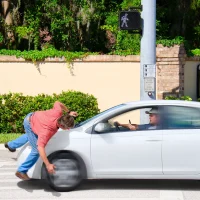
Car accidents at intersections, crosswalks, and merging lanes are among the most common causes of serious injuries throughout Los Angeles and across Southern California. When two drivers offer conflicting accounts of what occurred, the determination of who had the legal right-of-way often becomes the central issue in a personal injury claim. Understanding how California’s traffic laws allocate right-of-way and how violations affect liability is essential for anyone pursuing compensation after a crash.
Although traffic rules are designed to promote order and safety, they are frequently misunderstood or ignored. When disputes arise, our team of Los Angeles car accident attorneys can analyze how right-of-way statutes apply to the specific circumstances of a collision and build a case grounded in evidence and legal standards.
Right-of-Way at Intersections
Intersections are one of the most frequent locations for right-of-way disputes. California Vehicle Code provisions establish clear rules governing left turns, stop-controlled intersections, and traffic signals.
Drivers making a left turn must yield to oncoming traffic that is close enough to constitute an immediate hazard. Many serious “T-bone” or side-impact collisions occur when a driver attempts to turn left across traffic without sufficient clearance. In these cases, failure to yield often becomes the primary basis for liability.
At four-way stop intersections, the vehicle that arrives first generally has the right-of-way. If two vehicles arrive simultaneously, the driver on the left must yield to the driver on the right. These rules may appear straightforward, but conflicting testimony frequently complicates matters.
When traffic signals are involved, running a red light or attempting to accelerate through a yellow light can dramatically alter fault analysis. Police reports, traffic camera footage, and witness statements often play a decisive role in clarifying which driver violated signal controls.
Crosswalks and Pedestrian Priority
California law affords significant protection to pedestrians within marked and unmarked crosswalks. Drivers must yield the right-of-way to pedestrians crossing the roadway within a crosswalk at an intersection.
Accidents frequently occur when drivers fail to slow or stop for pedestrians or misjudge their position within the roadway. In some cases, drivers claim the pedestrian entered the street unexpectedly. However, the presence of a marked crosswalk or pedestrian signal often strengthens the injured party’s claim.
Even when a pedestrian may share some responsibility, California’s comparative negligence system allows recovery to be reduced proportionally rather than barred entirely. This principle also applies to vehicle-to-vehicle collisions involving disputed right-of-way.
Merging Lanes and Freeway On-Ramps
Right-of-way rules also govern lane merges and freeway entries. Drivers entering a highway from an on-ramp must yield to traffic already traveling on the roadway. Likewise, motorists changing lanes must ensure that the movement can be made safely.
Unsafe lane changes are a leading cause of sideswipe collisions and rear-end crashes. Blind spots, distracted driving, and excessive speed often contribute to these incidents. When a merging driver fails to yield properly, liability may rest squarely on that motorist.
However, comparative fault arguments are common. For example, a driver already in the lane may be accused of speeding or failing to take evasive action. Establishing fault requires careful review of vehicle damage, skid marks, electronic data, and available video evidence.
How Right-of-Way Violations Establish Negligence
In car accident litigation, violation of a traffic statute may serve as evidence of negligence. When a driver breaches a right-of-way rule designed to prevent collisions, that breach can form the foundation of a liability claim.
To prevail, an injured party must demonstrate that the violation directly caused the accident and resulting injuries. This often involves detailed investigation, including accident reconstruction analysis and examination of roadway design.
Insurance companies frequently challenge liability in right-of-way cases. Adjusters may argue that both drivers contributed to the collision or dispute the timing of traffic signals. Comprehensive documentation and strategic presentation of evidence are critical to countering these defenses.
Comparative Negligence and Shared Fault
California follows a pure comparative negligence system. This means that even if an injured driver is partially at fault, they may still recover damages, though the award will be reduced in proportion to their degree of responsibility.
In right-of-way disputes, insurers often attempt to assign partial blame to minimize payout exposure. For example, a driver who had the right-of-way may still face allegations of excessive speed or inattentiveness.
A well-prepared claim addresses these issues directly. By demonstrating how the other party’s failure to yield was the primary cause of the crash, attorneys work to protect the full value of the claim.
The Importance of Early Investigation
Right-of-way cases frequently hinge on objective evidence. Traffic camera recordings, dashcam footage, event data recorders, and independent witness accounts can clarify disputed facts.
Because video footage may be overwritten and witnesses become harder to locate over time, early legal intervention is critical. Preserving evidence strengthens negotiation leverage and positions the case for potential litigation if necessary.
Protecting Your Right to Compensation
Car accidents involving right-of-way violations can result in serious injuries, including fractures, traumatic brain injuries, and spinal damage. Medical expenses, lost income, and long-term rehabilitation needs can quickly become overwhelming.
Establishing liability through careful application of California’s right-of-way laws is often the first step toward securing compensation. Thorough legal analysis ensures that statutory violations are properly documented and presented.
Contact Kosnett Law Firm
If you have been injured in a collision involving a disputed right-of-way issue, you should seek experienced legal guidance. Understanding how California traffic laws apply to your case can significantly affect the outcome of your claim. Contact Kosnett Law Firm today for a confidential consultation and let us advocate for your recovery with diligence and care.
